
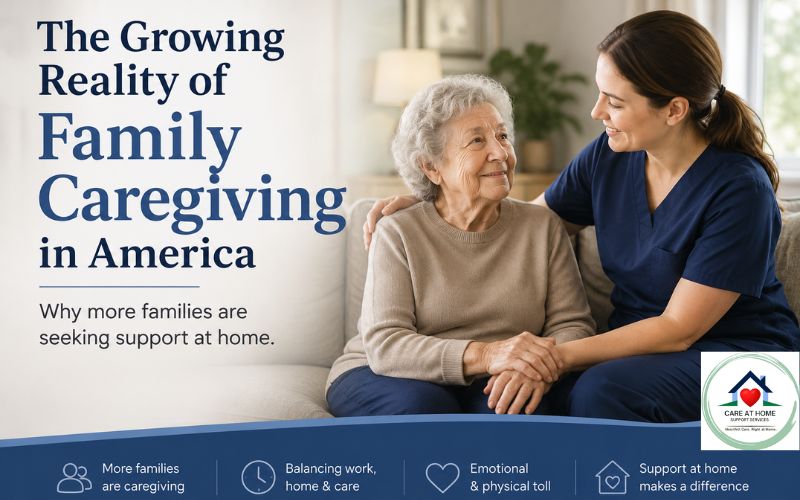
There is a quiet reality shaping more households than most people realize.
Caregiving is no longer something that happens occasionally or only in later stages of life. For many families, it has become part of everyday structure. A parent needs more support at home. A spouse requires assistance with routines. A family member quietly takes on responsibilities that slowly expand over time.
What often begins as “helping out” gradually becomes caregiving.
And across the country, more families are finding themselves in that position than ever before.
The Gap Between Longer Life and Daily Support
Americans are living longer than previous generations. But longer life does not always mean easier aging.
Many seniors are spending more years managing chronic conditions, mobility challenges, or memory-related changes. As these needs increase, families are often left filling the gap between medical appointments and everyday living.
That gap is larger than most people expect.
Meals still need to be prepared. Medications need to be remembered. Homes need to remain safe and manageable. Daily routines require consistency.
These are not occasional responsibilities. They are ongoing systems that hold daily life together.
Why So Many Families Feel Overextended
For many households, caregiving responsibilities develop gradually enough that they are difficult to recognize at first.
One family member starts checking in more often. Another begins helping with appointments. Someone adjusts their work schedule to be more available.
Over time, those adjustments accumulate.
Many caregivers continue working full-time jobs while supporting loved ones at home. Others balance caregiving while raising children or managing their own households. This has become so common that many now refer to it as the “Sandwich Generation,” where adults are simultaneously caring for aging parents and younger family members.
The challenge is not a lack of love or commitment.
It is that caregiving often expands faster than the support systems around it.
The Emotional Cost That Often Goes Unspoken
Caregiving affects more than schedules and finances.
It changes how people move through daily life.
There is the constant awareness in the background. The mental checklist that never fully turns off. The quiet concern about whether routines are being followed or whether something might happen when no one is around.
Over time, this level of responsibility can become emotionally and physically draining, especially when one person is carrying most of the load.
And because caregiving often happens privately at home, many families underestimate how much pressure they are already under until exhaustion begins to show.
Why More Families Are Turning to Home Care Support
This is one reason home care has become increasingly important.
Not because families want to step away from responsibility, but because many are realizing they were never meant to carry all of it alone.
Professional caregivers help stabilize the daily structure of care.
They assist with routines, mobility, meals, companionship, reminders, and day-to-day support that keeps life manageable. More importantly, they create consistency in areas that often become overwhelming for families trying to balance everything themselves.
This support does not replace family involvement.
It strengthens it.
The Shift Families Often Experience
When reliable support is introduced at home, many families notice something unexpected.
The atmosphere changes.
Conversations become less focused on constant reminders and coordination. Visits begin to feel more natural again. Family members regain time to rest, work, or simply be present without carrying every responsibility alone.
For seniors, staying at home with the right level of support often preserves comfort, routine, and dignity in ways that are difficult to replicate elsewhere.
Making Sense of a Changing Reality
The growth of caregiving in America is not just a healthcare issue. It reflects how modern families are adapting to longer lifespans, changing responsibilities, and limited time.
Most people do not plan to become caregivers overnight. They grow into the role gradually because someone they love needs support.
The important shift is recognizing when care has become too large for one person to manage sustainably.
Because in many cases, the goal is not to do less for the people we care about.
It is to build a support system that allows care, stability, and daily life to continue without one person carrying the entire weight alone.
Source:
National Press Foundation, “Pressures Mount on Nation’s Surging Family Caregiver Network” featuring insights from Jason Resendez
Read the original article